Which Football Rule Changes Will Be Implemented During the 2026 World Cup?
The 2026 FIFA World Cup just got a whole lot stricter. The International Football Association Board (IFAB) has confirmed a landmark set of rule changes that will apply from the 2026-27 season — and the World Cup in North America will be the first major tournament to use them all.
FIFA’s Chief Refereeing Officer Pierluigi Collina summed it up clearly: the goal is to tackle discrimination, cut time-wasting, speed up the game, and improve the experience for both players and fans. Check the full tournament schedule to see all 48 teams in action under the new laws.
Here is every rule change coming to the World Cup, explained simply.
All the New Football Rules at the 2026 World Cup
| Rule Change | What Happens |
|---|---|
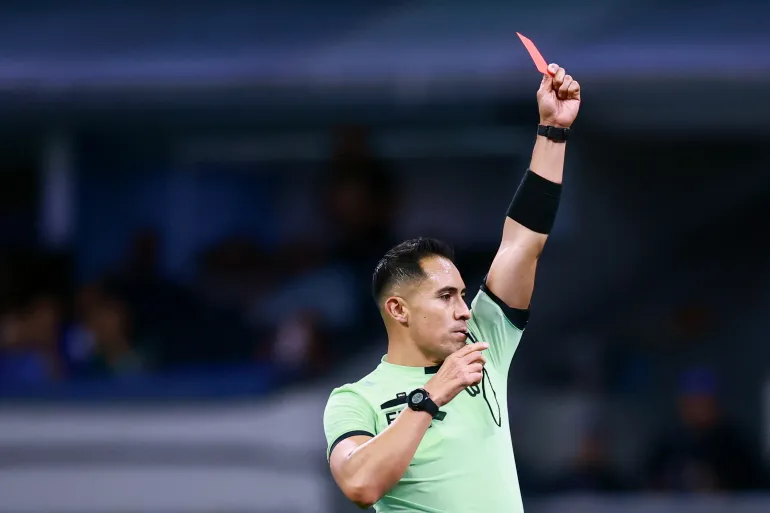
| Covering mouth during confrontation | Instant red card |
| Leaving field in protest | Instant red card |
| Throw-in countdown | 5 seconds or opponents get the throw |
| Goal-kick countdown | 5 seconds or opponents get a corner |
| Slow substitution | Sub delayed by one full minute |
| Outfield player treated on pitch | Must leave field for one minute |
| VAR expanded | Now covers mistaken identity, pre-restart fouls |
| Hydration breaks | 3-minute break per half, around the 22nd minute |
| Goalkeeper injuries | Players cannot leave pitch for a coaching timeout |
Red Card for Covering Your Mouth
This one came directly from a high-profile incident. Benfica’s Gianluca Prestianni was found to have made discriminatory slurs against Vinicius Jr while covering his mouth with his shirt during a match. UEFA gave him a six-game ban that was extended worldwide — but the existing laws had no immediate on-field punishment.
That changes at the World Cup. Any player who covers their mouth with their hand, arm or shirt during a confrontational situation will be shown a red card immediately. Friendly chats between international teammates on opposing sides? Fine. Anything that looks like an attempt to hide discriminatory or offensive language? Gone.
Red Card for Walking Off in Protest
This rule came after Senegal walked off the pitch during the Africa Cup of Nations final against Morocco, protesting a penalty decision. It caused chaos and showed a gap in the existing laws.
Now, any player who leaves the field to protest a refereeing decision gets a straight red card. The same applies to team officials who encourage players to do so. And if a team’s actions cause a match to be abandoned, they will automatically forfeit the game.
Five-Second Countdown for Throw-ins and Goal Kicks
Time-wasting has been a constant frustration at every major tournament. IFAB is tackling it head-on with a visual five-second countdown — referees will raise their hand and count down.
- Throw-in: If the ball is not in play when the countdown ends, possession switches to the opponents
- Goal kick: If the goalkeeper has not kicked within five seconds, the opponents are awarded a corner kick
That corner kick rule in particular is going to create drama at the World Cup. Goalkeepers who mess around too long near the end of games will be punishing their own team.
Substitution Rules Tightened
Players being substituted now have 10 seconds to leave the field once the board has gone up, and they must exit at the nearest touchline. No more slow walks across the full length of the pitch.
If the outgoing player ignores this, the incoming substitute is not allowed on until the next stoppage after a full minute has passed following restart. Exceptions apply for genuine injuries and safety concerns.
Outfield Players Must Leave After On-Pitch Treatment
If medical staff come onto the pitch to treat an outfield player, that player must leave the field for at least one minute after play resumes. The exceptions are goalkeeper injuries, collisions between teammates, severe head injuries, and situations where the player is about to take a penalty.
This closes a loophole that teams have used to break up momentum and burn time during tight matches.
VAR Gets Expanded Powers
VAR has been part of FIFA tournaments since Russia 2018 and it is getting a significant upgrade at this World Cup.
| New VAR Scenario | What Happens |
|---|---|
| Clearly wrong second yellow card | VAR can review and overturn the red |
| Mistaken identity (wrong player carded) | VAR can correct the decision |
| Corner kick incorrectly awarded | VAR can reverse it if done immediately |
| Foul committed before a set piece restarts | VAR can intervene, action taken, kick retaken |
The last point is particularly interesting. If an attacker fouls a defender before the ball is even in play from a free kick or corner, VAR can flag it, the referee reviews it, and the set piece is retaken with the appropriate card shown.
Hydration Breaks Every Half
Every single match at the 2026 World Cup will include a three-minute hydration break in each half, taken around the 22nd minute. Given that games are being played across the United States in summer heat — including in cities like Miami and Houston — this is a practical and important addition.
Referees have some flexibility on timing. If an injury happens around the 20th minute, the hydration break can be rolled into that stoppage.
Goalkeeper Injuries: No More Tactical Timeouts
When a goalkeeper is being treated on the pitch, players from both teams will now be required to stay on the field. The old practice of players jogging to the touchline for a quick word with the coaching staff during a keeper injury is gone.
Want to follow all 48 nations competing under these new rules? See the complete list of qualified teams and keep up with the latest developments through our FIFA 2026 updates hub.
FAQs
What are the biggest rule changes at the 2026 World Cup?
The most impactful changes are red cards for mouth-covering during confrontations, the five-second countdown for throw-ins and goal kicks, expanded VAR powers, and mandatory hydration breaks every half.
Why is covering your mouth with a red card now?
The rule was introduced after a player was found to have made discriminatory remarks while covering his mouth, with no immediate on-field punishment available under the old laws.
Can VAR overturn a red card at the 2026 World Cup?
Yes. VAR can now review cases where a second yellow card was clearly incorrect or where a card was given to the wrong player due to mistaken identity.
What happens if a goalkeeper wastes time on a goal kick?
If the goalkeeper does not take the goal kick within five seconds of the referee’s countdown, a corner kick is awarded to the opposing team.
Will there be water breaks at the 2026 World Cup?
Yes. There will be a three-minute hydration break in each half, taken around the 22nd minute of each period.