FIFA World Cup 2026: 200 Days Countdown Exposes Visa Crisis, Price Gouging & Political Chaos
With just 200 days remaining until the first whistle blows at the FIFA World Cup 2026, excitement is building for what former USMNT star Landon Donovan calls “the biggest sporting event in the history of the planet.” The expanded 48-team tournament across the United States, Canada, and Mexico promises unprecedented scale, but significant challenges remain unresolved as organizers race against time.
For fans tracking the tournament’s progress and planning their World Cup experience, FIFA World Cup 2026 offers comprehensive updates on this historic three-nation event that will transform how the world experiences football’s greatest competition.

Qualification Status: 42 Teams Confirmed, 6 Spots Remaining
As of late November 2025, 42 nations have secured their places in the tournament, including co-hosts United States, Canada, and Mexico. This marks a dramatic expansion from the traditional 32-team format, guaranteeing more star power and global representation than ever before.
Confirmed Participants Include:
Superstar Attractions:
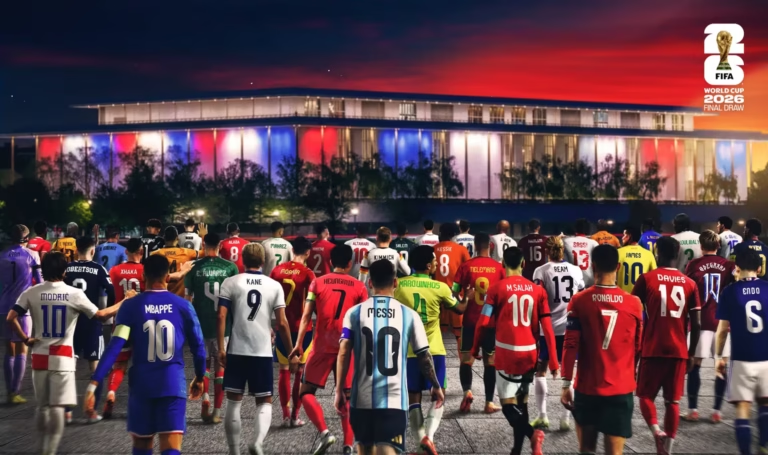
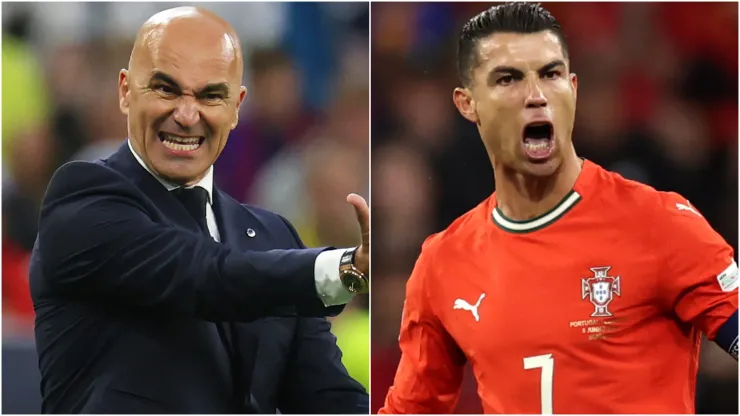
- Cristiano Ronaldo (Portugal) competing in his forties
- Lionel Messi (Argentina) making his final World Cup appearance
- Mohamed Salah (Egypt) leading African hopes
- Kylian Mbappe (France) entering his prime years
- Jude Bellingham (England) representing the next generation
Tournament Debutants:
- Erling Haaland (Norway) making his first World Cup appearance
- Lamine Yamal (Spain) showcasing teenage brilliance
- Curacao celebrating their historic first-ever qualification
Final Qualification Pathway
The remaining six spots will be determined through March 2026 playoffs:
| Playoff Type | Teams Involved | Spots Available | Decision Date |
|---|---|---|---|
| European Playoffs | 16 nations competing | 4 spots | March 2026 |
| Inter-confederation (Africa/Oceania) | Jamaica vs New Caledonia, winner vs DR Congo | 1 spot | March 2026 |
| Inter-confederation (South America/Asia) | Bolivia/Suriname vs Iraq | 1 spot | March 2026 |
For detailed information on all qualified nations and their paths to the tournament, visit the complete qualified teams breakdown.
Tournament Structure: Record-Breaking Scale and Distribution
The 2026 World Cup represents a logistical marvel with 104 total matches spread across 16 stadiums in three countries between June 11 and July 19, 2026.
Geographic Distribution:
- United States: 78 matches (75% of total) across 11 cities
- Mexico: Opening matchday fixtures in Mexico City and Guadalajara
- Canada: Group stage and Round of 16 matches only
All matches from the quarter-finals onwards will take place exclusively in the United States, with the final scheduled for MetLife Stadium in New Jersey, just west of New York City.
This structure creates unprecedented complexity for the tournament schedule, requiring careful coordination across four time zones and three national jurisdictions.
Political Complications: Visa Challenges and Travel Restrictions
The return of President Donald Trump to the White House has created both opportunities and obstacles for tournament organizers. While Trump’s close relationship with FIFA President Gianni Infantino has secured $625 million in federal security funding, other political factors threaten to dampen international attendance.
Travel Ban Concerns
Executive orders have banned travel from over a dozen countries, including two World Cup participants:
- Iran: Qualified for the tournament but citizens face travel restrictions
- Haiti: Also qualified but subject to similar limitations
While exemptions exist for athletes, support staff, and immediate relatives, the State Department confirmed to The Athletic that fan exemptions will only be granted when applicants demonstrate advancement of U.S. “national interest.” Such exceptions are expected to be extremely rare.
The New FIFA Pass Solution
In response to visa processing delays that previously took up to a year in countries like Colombia and Ecuador, FIFA and the Trump administration announced a new FIFA Pass system. Secretary of State Marco Rubio promised visa appointments for ticket holders within six to eight weeks of applying.
Critical Limitations:
- A ticket does not guarantee visa approval
- Applicants still must prove ties to home countries
- Enhanced social media vetting will apply
- Consular officers retain full discretion on approvals
This falls short of Trump’s 2018 bid letter promising that “all eligible athletes, officials and fans from all countries around the world would be able to enter the United States without discrimination.”
Host City Tensions: Federal Government vs. Local Authorities
Recent months have seen escalating tension between the White House and several U.S. host cities, particularly Seattle, Boston, and Los Angeles. Trump has repeatedly threatened to relocate World Cup matches from these cities over undefined “safety concerns.”
Immigration Enforcement at Stadiums
During the 2025 Club World Cup held in the United States, FIFA received 145 human rights complaints through its grievance mechanism:
- 37 complaints related to federal immigration policies or enforcement
- Multiple reports of alleged ICE and Customs and Border Protection sightings at stadiums
- Concerns about National Guard deployments in Los Angeles
The Department of Homeland Security denied conducting enforcement operations at Club World Cup venues, calling the reports “fear-mongering.”
FIFA’s Controversial Neutrality
FIFA President Infantino’s response to Trump’s relocation threats has frustrated host city executives. During a recent White House appearance, Infantino stated that “safety and security is the number one priority” but deferred to federal government authority on where games should be played.
This position infuriates city officials who hold official FIFA contracts and have invested hundreds of thousands of dollars preparing for the tournament. Several executives anonymously questioned why they should continue investing when FIFA appears unwilling to defend them publicly.
Economic Projections: Billions at Stake
FIFA forecasts staggering financial returns from the expanded tournament format.
Revenue Expectations:
- $13 billion total for 2023-2026 cycle (including Women’s World Cup and Club World Cup)
- $3 billion from ticket sales alone
- $30 billion predicted economic impact for the United States
- $50 billion combined impact from Club World Cup and World Cup
These projections dwarf the $7.5 billion earned during the Qatar 2022 cycle, driven primarily by the increase from 64 to 104 total matches.
However, U.S. Travel forecasts a 6.3% decrease in inbound international visits for 2025 due to negative sentiment toward the country, partially driven by tariff policies. This could significantly impact the expected foreign visitor spending crucial to justifying local and state tax investments.
Ticket Pricing Controversy: Accessibility vs. Revenue
FIFA’s dynamic pricing strategy has sparked widespread criticism from fan advocacy groups and even New York City’s newly elected mayor, Zohran Mamdani.
Price Points That Shocked Supporters
| Match Category | Lowest Price | Highest Price | Upper Deck Final |
|---|---|---|---|
| Group Stage | $60 | Hundreds of dollars | N/A |
| Final | Category 3 unknown | $7,000+ for Category 1 | $2,790 – $4,210 |
Additional Pricing Concerns:
- FIFA increased prices by 25% for Mexico and Canada matches between initial announcement and second sales phase
- Hospitality packages range from $3,500 to $73,200 per person
- Official resale platform charges both buyers and sellers 15% fees
- No price caps on resales (except Mexico), with tickets listed at 10x face value within hours
For comparison, the 1994 World Cup in the United States offered tickets ranging from $25 to $475 and attracted over 3.5 million fans to a 24-team tournament.
Criticism from Fan Organizations
Ronan Evain, director of Fans Supporters Europe, condemned FIFA’s approach: “This is a World Cup for middle-class westerners and the happy few from the rest of the world that can somehow enter the U.S. This is not ‘Make football truly global.’ This is the privatization of what was once a tournament open to all.”
FIFA defends the pricing by arguing revenues are essential for global football development, though critics note over $1 billion in prize money was distributed to wealthy clubs during the recent Club World Cup.
Diplomatic Complications: Three-Nation Tournament Strain
Trump’s ongoing trade disputes with Canada and Mexico have created additional challenges for what should be a celebration of North American unity.
Relationship Warning Signs:
- Canada and Mexico excluded from draw location announcement
- Infantino rarely appears publicly with Canadian or Mexican politicians
- Draw scheduled at Trump-chaired Kennedy Center in Washington D.C.
- Infantino laughed at Trump’s inauguration joke about renaming Gulf of Mexico to Gulf of America
- Infantino present when Trump discussed potential military strikes on Mexican drug cartels
Miguel Maduro, former chairman of FIFA’s governance committee, described Infantino’s pro-Trump comments as a clear breach of political neutrality rules.
Infrastructure and Logistics: The Stadium Challenge
Only 5 of 16 host stadiums feature fixed or retractable roofs providing climate control, forcing organizers to schedule most matches during evening hours to protect players from extreme heat.
Covered Venues (Climate Controlled):
- Can safely host earlier kick-offs
- Limited capacity prevents scheduling all early matches here
- Strategic advantage for player welfare
Open-Air Stadiums (11 venues):
- Exposed to full summer heat conditions
- Require evening scheduling for safety
- Majority of tournament venues
This infrastructure limitation directly influences the challenging kick-off times facing international broadcasters and fans worldwide.
200-Day Countdown: What Still Needs Resolution
As the clock ticks toward June 11, 2026, several critical issues remain unresolved:
Immediate Priorities:
- Finalize visa processing procedures for all qualified nations
- Resolve host city security and relocation threats
- Address ticket accessibility and pricing transparency
- Improve diplomatic relations between co-host nations
- Complete stadium preparations and climate mitigation plans
- Establish clear policies on immigration enforcement during matches
Group Stage Draw Impact:
The December 5, 2025 draw at Washington D.C.’s Kennedy Center will trigger a cascade of planning decisions. Only after learning their opponents and match locations can fans finalize travel arrangements, though visa wait times may still present obstacles.
FAQ’s
How many teams have qualified for FIFA World Cup 2026?
42 teams have confirmed their places as of November 2025, with 6 spots remaining. The final qualifiers will be determined through European playoffs in March 2026 (4 spots) and inter-confederation playoffs between Jamaica/New Caledonia/DR Congo and Bolivia/Suriname/Iraq (2 spots). The tournament expands to 48 teams for the first time.
Where will the FIFA World Cup 2026 final be played?
The final will take place at MetLife Stadium in New Jersey on July 19, 2026. All matches from the quarter-finals onward will be played exclusively in the United States, while Mexico and Canada will only host games through the Round of 16 stage. MetLife Stadium is located just west of New York City.
How much do FIFA World Cup 2026 tickets cost?
Tickets start at $60 for cheapest group stage seats but most cost hundreds of dollars. Final tickets range from $2,790 for upper deck seats to over $7,000 for premium Category 1 seats. FIFA’s official resale platform has listings at 10x face value with 15% fees charged to both buyers and sellers.
Will fans from Iran and Haiti be allowed to attend World Cup 2026?
Both Iran and Haiti have qualified despite U.S. travel bans on their citizens. The State Department confirmed exemptions for fans will only be granted if applicants demonstrate advancement of U.S. “national interest,” which will be rare. Athletes and immediate family receive automatic exemptions, but regular fans face significant barriers.
Can President Trump move World Cup matches to different cities?
Trump has threatened to relocate games from Seattle, Boston, and Los Angeles over safety concerns, but FIFA maintains exclusive authority over match locations under its contracts with host cities. FIFA has stated it will “defer to the federal government” on such decisions, creating tension with city officials who invested heavily in preparations.
How long does it take to get a U.S. visa for World Cup 2026?
The new FIFA Pass system promises visa appointments within 6 to 8 weeks for ticket holders, down from nearly a year in countries like Colombia and Ecuador. However, a ticket does not guarantee visa approval, and applicants still face rigorous screening, social media vetting, and must prove ties to their home countries.
The FIFA World Cup 2026 stands at a crossroads between unprecedented opportunity and significant operational challenges. With 200 days remaining, the tournament’s success depends on resolving political tensions, ensuring fan accessibility, and delivering on the promise of truly global football celebration. As organizers navigate these complex issues, the world watches to see whether the largest World Cup in history can also be the most inclusive.